

 Graben 31/11, 1010 Wien, Austria

Preserve the beauty of your natural smile
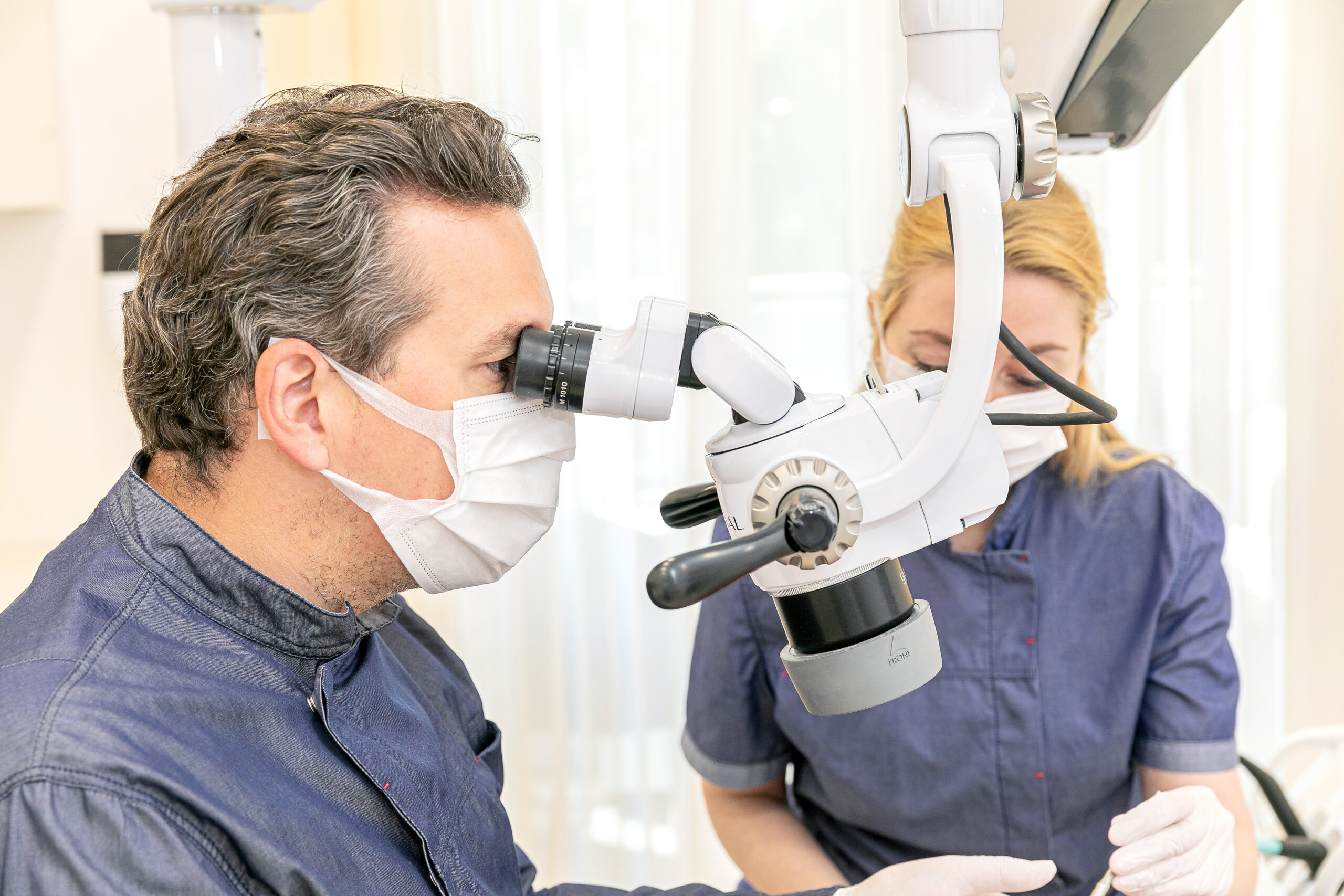
When it comes to safeguarding your teeth, only the most advanced techniques should suffice. Microscopic root canal treatment represents the pinnacle of precision dentistry, significantly enhancing the chances of preserving even the most compromised teeth, including those with prior root canal procedures.
Why opt for microscopic root canal treatment
The future of precision endodontics
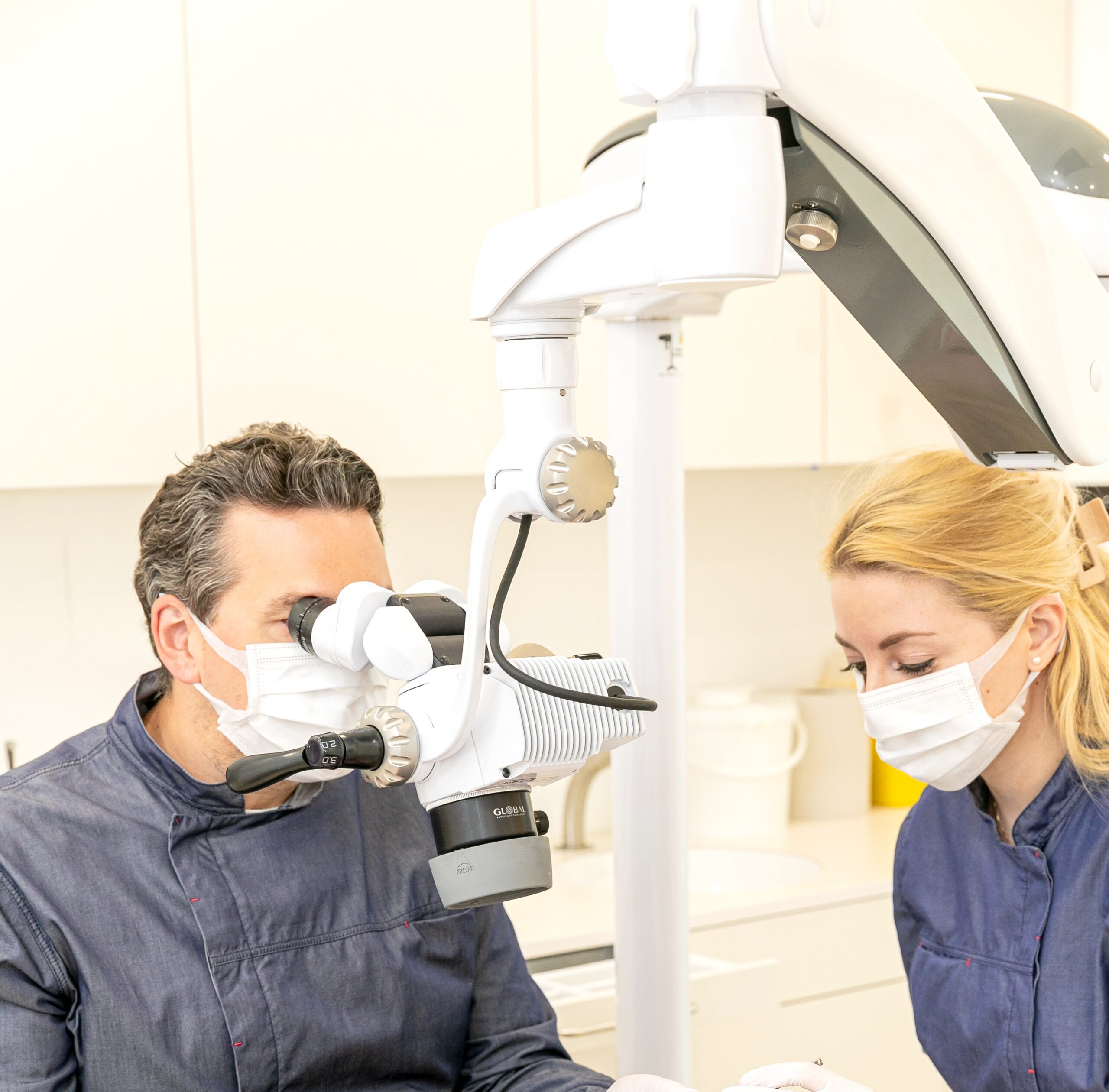
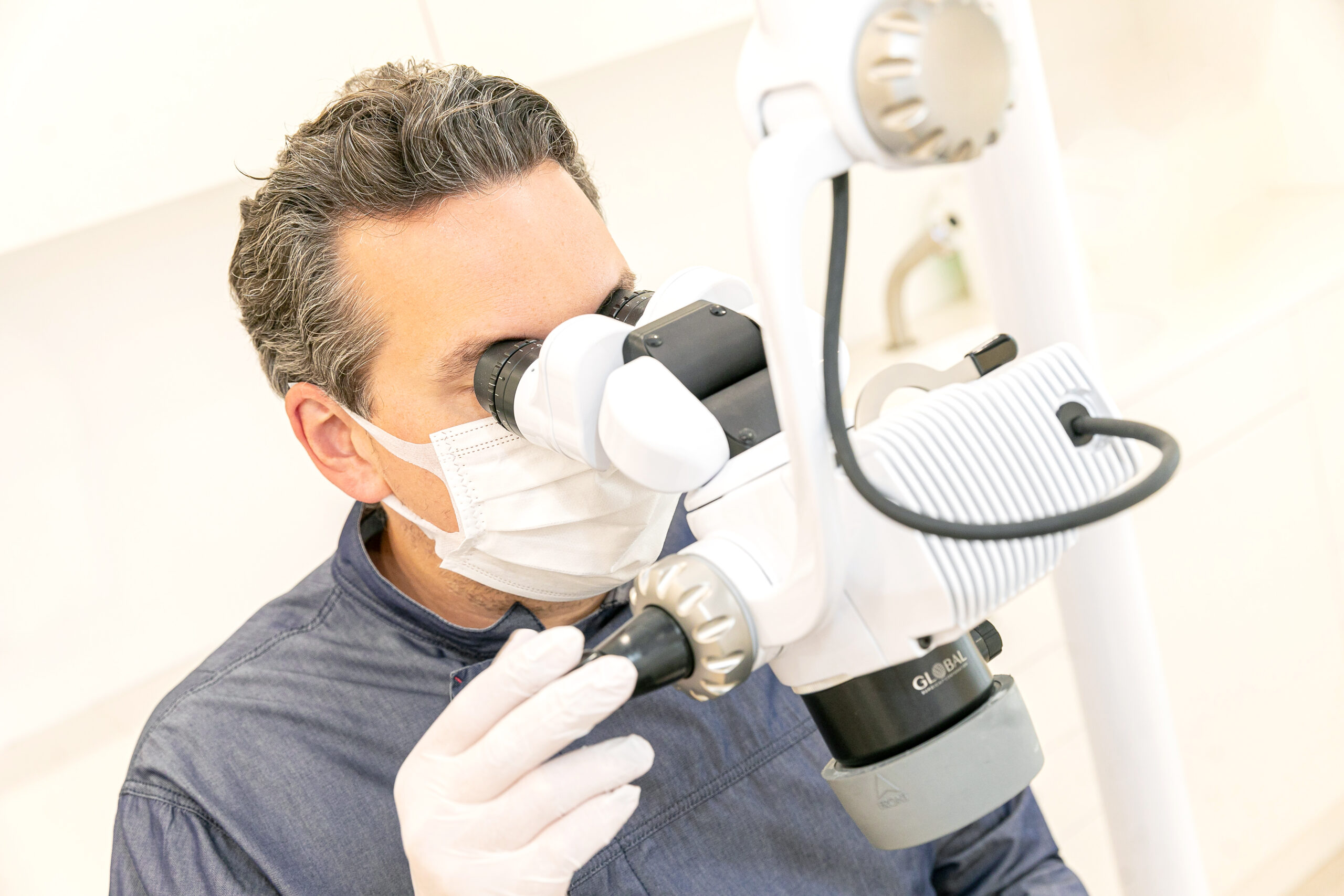
Microscopic root canal treatment represents a breakthrough in modern dentistry, offering unparalleled precision, safety and success rates. By utilising advanced microscopy technology, we can achieve outcomes far superior to traditional methods, particularly for molars and teeth with intricate anatomical structures.
Precision beyond the naked eye
Traditionally, with a naked eye, only 3 root canals can be identified in upper molars, but in over 90% of the cases, there are 4 root canals. If these are not properly treated, infection remains. An untreated infected canal will, in most cases, lead to an abscess. Even if three out of four canals are perfectly filled, infection in the fourth canal will cause problems.
A revolutionary approach to complex cases
Teeth with curved roots, narrow canals or prior treatments often require exceptional attention to detail. The enhanced visibility provided by the microscope allows for the meticulous use of ultra-fine instruments to navigate these challenging areas with confidence – something simply unattainable with the naked eye.
Can microscopy improve the treatment of infections?
Absolutely. The detailed view afforded by a microscope enables a comprehensive understanding of the root canal system. This precision ensures that all infected areas, including those typically overlooked, are properly cleaned and treated.
For teeth with particularly complex structures, such as:
- upper molars, which frequently contain an extra canal,
- curved roots, which can be difficult to navigate,
- previously treated teeth, where residual infection or overlooked canals persist,
Microscopic root canal treatment significantly increases the likelihood of successful outcomes. This advanced technology allows for a meticulous re-treatment process, even in the most challenging scenarios.
How long does a microscopic root canal treatment take?
The duration of a microscopic root canal treatment reflects the meticulous care and precision required for optimal outcomes. The first step is diagnosis-understanding why the tooth has become compromised and determining the most effective treatment approach.
During the diagnostic phase, several factors are assessed:
- the cause of the tooth’s condition: identifying sources of decay, damage of infection
- structural integrity: evaluating whether the crown can be restored
- tooth stability: ensuring the tooth is secure within its socket or assessing the need for periodontal intervention
- anatomy of the root canal system: determining the compexity of the canals, including curvature or obstructions
A detailed diagnosis often involves advanced imaging, such as a 3D CT scan, to create a comprehensive treatment plan tailored to the tooth’s specific needs.
Microscopic root canal procedures require more time than traditional methods due to their enhanced precision. Each session is designed to ensure the highest standard of care, which includes:
- rubber dam isolation: establishing a sterile treatment environment.
- disinfection protocols: allowing modern cleansing agents adequate time to eliminate bacteria effectively.
Typically, sessions range between 1.5 to 2 hours each. Simpler cases my be resolved within 1-2 sessions, while more complex molars or re-treatments can require 2-4 sessions. This thorough approach ensures not only immediate relief but also long-term success.
Why is rubber dam isolation necessary for microscopic root canal treatment?
Rubber dam isolation is a cornerstone of successful root canal treatment, particularly for procedures requiring microscopic precision. This simple yet vital step provides:
- sterile conditions: it prevets saliva and oral bacteria from contaminating the treatment area, ensuring an infection-free process
- patient safety: by isolating the tooth, it eliminates the risk of any materials or tools entering the throat during the procedure
- enhanced disinfection: modern antibacterial solutions can be used more effectively when the tooth is fully isolated, allowing for a deeper and more thorough cleanse.
The rubber dam not only contributes to a better treatment outcome but also ensures a comfortable and worry-free experience for patients.

We recommend microscopic root canal treatment in the following cases:
Previously treated root, still causing issues…
After traditional root canal treatments, problems such as chronic inflammation, throbbing tooth pain, sensitivity to pressure, etc., often arise. Using a microscope, we can often find overlooked root canals and inflamed areas.
Crowned tooth, bridge
In these cases, inflamed areas that could not be disinfected with the naked eye are often present. Perforations can occur, which, if left untreated, can lead to tooth loss.
Upper first molars (6s)
Root canal treatment of molars is challenging due to their complex anatomy. Proper cleaning and disinfection of these teeth is often not possible with the naked eye. Microscopic root canal treatment is much more successful for these teeth.
Root canal treatment of premolars (small molars)
Small molars have simpler anatomy but can still surprise you. If a previously treated premolar does not heal or causes unclear symptoms, a consultation is recommended.

Tun Sie sich etwas Gutes!
Schenken Sie sich ein schmerzfreies Zahn Check up
- spezialisierte, private Wahlärzte
- angst- und schmerzfreie Zahnbehandlungen
- motiviertes, ambitioniertes Team
- angenehme, freundliche Atmosphäre
Ihr behandelnder Arzt und Begleitung

Dr. Mihai Josan
Mikroskopzahnarzt
Fall-Beispiel


Pre Holiday
The patient came on the recommendation of a dentist. The colleague was unable to get through the canals due to the complicated root canals of the tooth. The key to successful root canal filling is to be able to treat all root canals over their entire length.
A CBCT image was taken, the image showed that the anatomy of the tooth was problematic and two root canals were intertwined in the root canal area. I decided on the strategy of first widening the two root canals to the point where they converged and then it was sufficient to widen only one canal from there to the root apex. This allowed me to work on the root canals and avoid unwanted breaking of the root canal instruments. Trepanation is followed by the most important step, the disinfection of the canals. After this phase of the treatment, I made the filling using a so-called heat procedure, which also allowed me to successfully seal the lateral branches of the root canal.
Ein Zahnarzt-Besuch in Wien der schmerzfrei und stressfrei ist, geht das?


Ja, natürlich. Unser verständnisvolles und erfahrenes Team widmet Ihnen die Zeit und Aufmerksamkeit die Sie brauchen. Es ist uns wichtig, das Sie sich immer wohl und sicher fühlen.
- Unser Team an spezialisierten Fachärzten ist für Sie da
- schmerzfreie Zahnbehandlungen in jedem Fachbereich
- Angenehme Aussicht auf die schönen Altbauten am Graben
- Perfekte öffentliche Anbindung: Von der U-Bahn Stephansplatz sind es nur 20 Meter!

Dentist reviews
Sabine Erdei
I find the practice to be very professional. I’m extremely satisfied with the treatment. I was very anxious, but the doctor’s personality, his calm demeanor and the assistant’s composure helped ease my fears. The music during the treatment also helped me overcome my anxiety. I felt no pain and the doctor was attentive and considerate throughout. Thank you very much!

Natalia Idziak
Very good dental practice. The atmosphere is excellent and you feel comfortable. Hardly any wait times, very friendly staff, modern equipment, very clean. You’re given time and your needs are addressed. Highly recommended.
Andreas Honsak
Excellent practice, competent team and always very friendly! Technologically advanced, never any waiting time! Highly recommend, especially if you’re anxious about dental visits!
Masa
The dentist and the staff are very friendly and the service is excellent. I’d happily come back again next time.
Viktoria Klein
My husband and I have been patients at Aventurin for years. The practice is friendly, highly professional and personable, the entire team is accommodating. The dentists take time to explain everything thoroughly. You feel well taken care of. No long waits. Absolutely recommended, if I could, I’d give more stars.

